Eridu: The Birthplace of Babylon & Dawn of Civilization | Bil Weekend
History
Eridu: The Birthplace of Babylon and the Dawn of Civilization
B
Bil Weekend
June 24, 2026
4 min read
138 views
B
Written By
Bil Weekend
Editorial Team
Key Facts
Location
Southern Iraq
Established
~5400 BCE (Ubaid period)
Key Deity
Enki (God of water, wisdom, and creation)
In the vast landscapes of southern Mesopotamia, where the rivers Tigris and Euphrates shaped the story of humanity, lies an ancient city, Eridu — the place often described as one of the earliest urban settlements in the world. And, according to Mesopotamian tradition, the first city created by the gods. Long before the rise of Babylon, Ur, and other famous cities of ancient Iraq, Eridu stood as a symbol of the beginning of organized human society.
Located in modern-day southern Iraq, near the city of Nasiriyah, Eridu was part of the ancient region of Sumer. Its history stretches back more than 7,000 years, making it one of the oldest known centers of human settlement. Although Babylon would later become the political and cultural heart of Mesopotamia, many of the ideas and traditions that shaped Babylonian civilization had their roots in places like Eridu.
The First City of Mesopotamia
Eridu was considered the first city on Earth. The Sumerian King List, a historical-mythological document, begins its story of kingship with Eridu, stating that “kingship descended from heaven” and was first established there. While these accounts combine mythology and history, they reflect the deep importance Eridu held in the imagination of Mesopotamian people.
Archaeological discoveries show that Eridu was inhabited from around 5400 BCE, during the Ubaid period. Early communities built simple mud-brick houses and developed agricultural techniques that allowed permanent settlements to flourish. Over time, Eridu grew into a religious and cultural center with an addition of its captivating Marshland beauty, influencing the development of later Sumerian cities.
The Sacred City of Enki
The greatest importance of Eridu was due to its connection with the god Enki (Ea), the Mesopotamian deity associated with water, wisdom, creation, and knowledge. The main temple of Eridu was dedicated to Enki and was repeatedly rebuilt over many centuries.
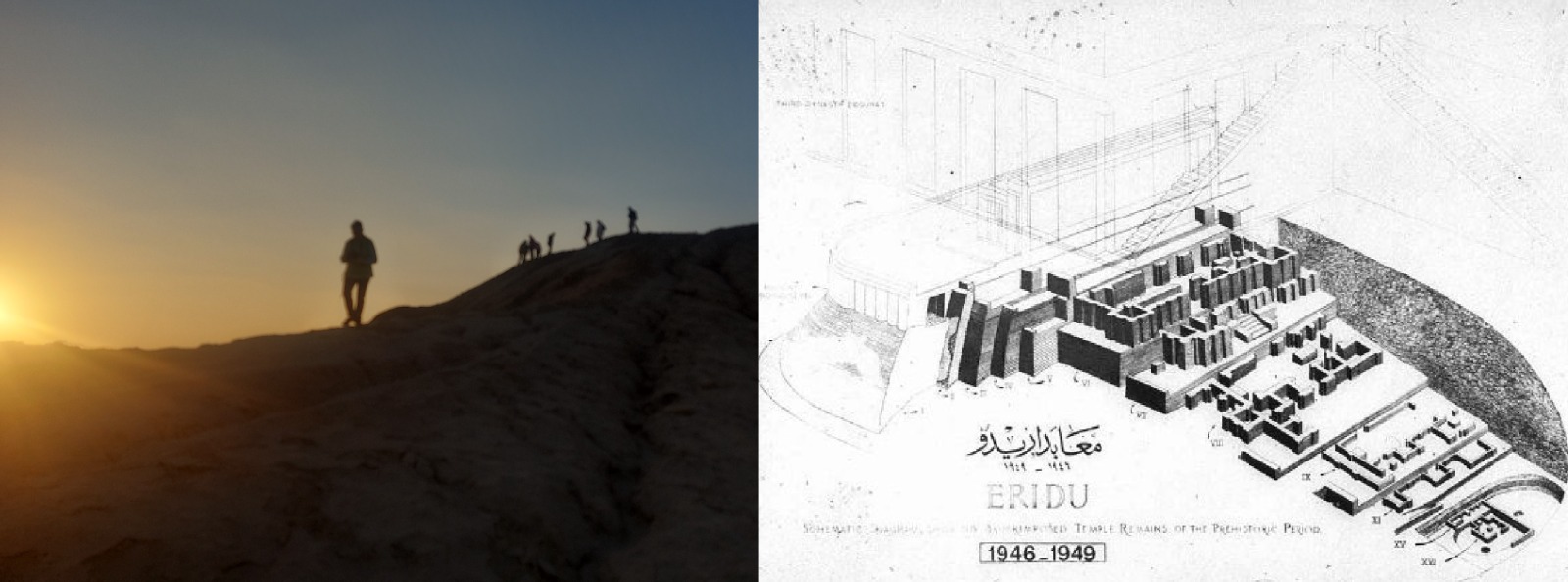
The Temple of Enki is considered one of the earliest examples of monumental religious architecture. Currently archaeologists discovered multiple layers of temples built one above another, showing the continuous importance of the site. The relationship between Eridu and water was especially meaningful because irrigation and rivers were essential to life in ancient Mesopotamia.
From Eridu to Babylon: The Legacy of Civilization
Although Eridu itself never became the empire that Babylon later became, its influence can be seen throughout Mesopotamian civilization. Many foundations of urban life — including religious institutions, social organization, agriculture, and life & writing traditions — developed during the early periods represented by Eridu.
Centuries later, Babylon emerged as one of the greatest cities of the world. Under rulers such as Hammurabi, Babylon became famous for its laws, architecture, and intellectual achievements. However, Babylonian culture inherited so much of its religious and cultural heritage from earlier Sumerian cities, including Eridu.
In this sense, Eridu can be viewed as a cultural ancestor of Babylon — not the direct birthplace of the city itself, but a place where many of the ideas that shaped Babylonian civilization first began.
Archaeological Discoveries at Eridu
Modern excavations at Eridu have revealed important evidence about early human settlement. Archaeologists uncovered residential areas, temples, pottery, tools, and other artifacts that provide insight into daily life thousands of years ago.
The site was excavated mainly during the 20th century by Iraqi and international archaeological teams. These discoveries helped historians understand the transition from small farming communities to complex urban societies.
Eridu Today: A Heritage of Humanity
Today, Eridu remains one of Iraq’s most important archaeological sites. Its quiet ruins stand as a reminder that some of humanity’s greatest achievements began with small communities beside ancient rivers and its marshlands.
The story of Eridu is not only the story of a city; it is the story of humanity’s first steps toward civilization. It represents the moment when people began building permanent homes, creating institutions, developing religious traditions, and organizing societies that would influence the world for thousands of years to come.
Before Babylon became a symbol of power and greatness, there was Eridu — a city where the journey of civilization began.
You can travel beyond the pages of history and visit Eridu in person with Bil Weekend. Our journey takes you to the heart of ancient Mesopotamia, where you can explore the archaeological site, see ancient temples and cuneiform stamped bricks and explore what once was. This is not just a visit to an ancient site — it is a chance to stand where humanity’s journey into organized society began.
Join BilWeekend and experience Eridu, an ancient city and one of the first chapters in the human story.
Let's visit and explore humanity's ancient roots and achievements.
💡 Tips for Visitors
✓Book a guided tour with Bil Weekend to ensure a safe and informative journey into the site, as it is not easily accessible.
✓Wear comfortable clothing and walking shoes, as exploring the seven mounds of Eridu requires walking over uneven terrain.
Frequently Asked Questions
What is Eridu?
Eridu is an ancient city located in modern-day southern Iraq. According to Mesopotamian tradition, it is considered the first city on Earth and one of the earliest urban settlements in the world.
How old is the city of Eridu?
Archaeological discoveries indicate that Eridu was inhabited from around 5400 BCE during the Ubaid period, making it over 7,000 years old.
What is the connection between Eridu and Babylon?
While Eridu didn't become a massive empire like Babylon, it served as its cultural ancestor. Many foundational ideas of urban life, religion, and society that shaped Babylonian civilization first began in Eridu.